
Car camping’s rise to fame in recent years can be accredited to the pandemic. With people feeling cooped up and hotel travel being impossible, driving to a peaceful location and camping out in or next to the car was the perfect solution. Though travel restrictions have been lifted, people are still choosing to hit the road and continue to enjoy car camping.
In this blog, we’ll give you the inside scoop on how to find a location, the car camping essentials you need to bring, camping best practices, and choosing the best car for your camping adventure.
What is Car Camping?
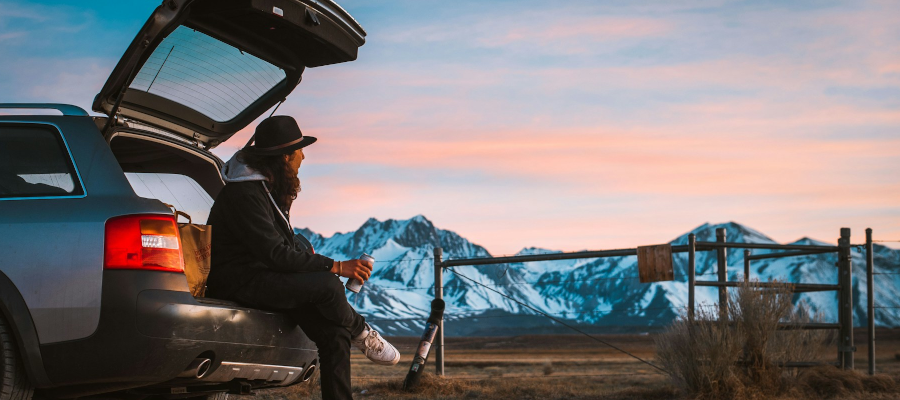
The main difference between traditional camping and car camping is that traditional camping entails hiking to a camp location, only bringing what you can carry and/or fit in your backpack. Car camping, however, means finding a place to park the car and sleeping in your car, or setting up a tent next to it. Car camping is great because not only is it beginner-friendly, but it allows you to carry more home comforts since weight and volume are less of a concern.
Setting Up Camp
Park Legally
Regardless of if you will be sleeping in your car or pitching a tent, it’s important to note that you can’t just set up camp anywhere. Be sure to find a place to stay ahead of time so you avoid accidentally trespassing. England and Wales are stricter about parking, whereas Scotland is more relaxed due to the public’s right to access the land. There are plenty of digital resources to help you find the perfect, legal parking spot. This includes Park4Night, Campsites.co.uk, Brit Stops and iOverlander. Once you’ve picked your destination, give someone the details of your trip for safety.
Make a Plan
Don’t stop at planning where you’ll camp, but go above and beyond by checking out the area you’ll be staying in, as well as pit stops to supermarkets and service stations. By doing a bit of reconnaissance, you’ll have a better idea of what to pack. If staying somewhere more remote, it will be important to pre-plan meals and pack accordingly. If staying somewhere with an abundance of nearby shops, you can wait to do the big grocery shop when you arrive.
Camping in Comfort
Upon arrival, park on flat ground in a well-drained, shaded area. This will help you get the best and safest night’s sleep. For more tips for keeping your car cool, check out this article.
Be sure to turn off your car lights. Regardless of if you’re sleeping in a tent or your vehicle, you’ll be going in and out frequently to grab things. Avoid the disaster of draining your car battery by turning off the lights that automatically come on whenever the doors are opened.
Finally, roll down your windows for a cross breeze to keep cool at night. Plan ahead by packing detachable mosquito mesh for the windows to keep out bugs. You can find these screens on Amazon or from your chosen outdoor gear provider.
Car Camping Essentials
Tent
The first essential depends upon whether you’ll be camping in or outside of your car. If outside, be sure to bring a spacious enough tent for your group.
Sleep Essentials
While a mattress topper or mat is preferable for camping in a tent, it is essential for camping in your car. The most efficient way to car camp is with the back seats folded down to create a larger, flat surface. The mattress topper makes this set up more comfortable. Don’t forget pillows, sleeping bags, and blankets. As you don’t have to carry heavy gear to your camping spot, you don’t have to go so minimalist with the packing list!
Food and Water
The next camping essential is a no-brainer – food and water. Researching your campsite and surrounding areas will help inform what you need to bring. If there is a cooking station and nearby grocery stores, you don’t initially need to bring much in the way of food or cooking gear. Just be sure to pack some pre-packaged food for snacks and emergencies. Bringing a cooler is important to help make your food last longer. Regarding water, more is always more. You don’t have to carry the bottles so be sure to have plenty accessible, especially in warm weather. It is important to stay hydrated!
Cooking Equipment
If you are bringing your own portable camp stove or instant barbecue to cook some meals, check the site’s burn regulations. There are many places that ban these items due to the danger of starting wildfires. Additionally, take care that you leave the location as you left it and ensure that all fires are fully extinguished. It’s dangerous to make any fire in windy conditions as it can easily get out of hand. We want to keep these areas of natural beauty beautiful and keep ourselves, others and the landscape safe!

Let There be Light
Bring lighting, be it a headlamp or camping lamp. Your phone’s flashlight may seem like enough, but when you need to find something in the dark barely illuminated by a device that’s not fit for the purpose, you’ll feel otherwise. Headlamps are great because they can be hung from a car handle to act as a ceiling light and worn on the head when you want to hike (or for when nature calls).
First-Aid Kit
No one ever thinks that they are going to get injured on a trip, but prepare for the possibility anyway. A first-aid kit is always a good idea, especially the more remotely you’re camping. Plasters, gauze, antiseptic creams/sprays, adhesive tape, wound dressings and paracetamol are a must. Much like a scout, it’s best to “be prepared”.
Camping Chairs
Sitting on the ground or in the car will feel cramped after a few hours, let alone a few days. Bring camping chairs to stretch out and relax. Ideal for meals or card games, it’s technically not an essential, but a really essential convenience.
Entertainment
Spending time in nature is medicinal and entertaining in equal measure, but that doesn’t mean forgoing entertainment entirely. Make the most of your down-time with both analogue and downloadable digital entertainment. Small, portable card games are a fun way to engage with your camping partners. Books are great solo entertainment. Download movies, TV shows, music and podcasts to enjoy; signal out in the wild isn’t a guarantee. Don’t know where to start with podcasts? Check out our article on our top 8 podcasts to listen to.
In the same vein as entertainment, be sure to bring some portable chargers to keep phones, laptops or your digital device of choice alive. Even if you want to disconnect with nature, having a charged phone is important in case of an emergency (or directions).

There’s No Such Thing as Bad Weather, Just Bad Clothing
When camping, packing for the weather, climate, and destination has never been more important. This is especially important if you plan to sleep in the car where you can’t get away with using the air conditioning or heating all night long. Layers give you flexibility to adapt to the changes in temperature so you can focus more on what really matters. Start with a moisture-wicking base, then add a warm jumper and a wind-proof, waterproof coat. You don’t necessarily need to splurge on a pair of fancy hiking boots. Depending on your level of activity and the terrain, a pair of sturdy trainers will serve you well.
As we said earlier, one of the best parts of car camping is that you can bring more things with you. No longer are you constrained by what you can carry on your back – pack according to your daily routine (within reason).
Choosing a car
Although you can make-do with most cars, the best vehicles for comfort are those with long, spacious boots. This is important for packing your essentials as well as converting the boot into your sleep space. All-wheel or four-wheel drive is also a bonus as going off the beaten path may sometimes mean muddy “roads.”
We hope you have a great time car camping! If you use any of our car camping ideas, be sure to tag us in your photos on Instagram, Facebook or X (Twitter).