
UNESCO world heritage sites are places of great importance to the world’s history and merit greater conservation efforts to be enjoyed for generations to come. There are over 1,000 UNESCO heritage sites in the world, over 30 of which are in the UK. A site is categorised as either cultural, natural, or a mix of cultural and natural—all of which can be found in the UK.
If you’ve already visited the four located in London—Kew Gardens, the Tower of London, Maritime Greenwich, and the Palace of Westminster and Westminster Abbey—we’ve pulled together a list of notable ones that are under six hours drive away.
Blenheim Palace (Inscribed 1987)
1 hour 10 minutes drive
Home to the Duke of Marlborough, Blenheim Palace was a reward for winning the 1705 Battle of Blenheim. Built in a grand baroque-style with gorgeous terraces, the palace is evocative of another UNESCO World Heritage site: the Palace of Versailles. This palace was also once the home to Winston Churchill. To learn more about Blenheim, like how Winston Churchill once lived here, read our article about the best stately homes to visit.
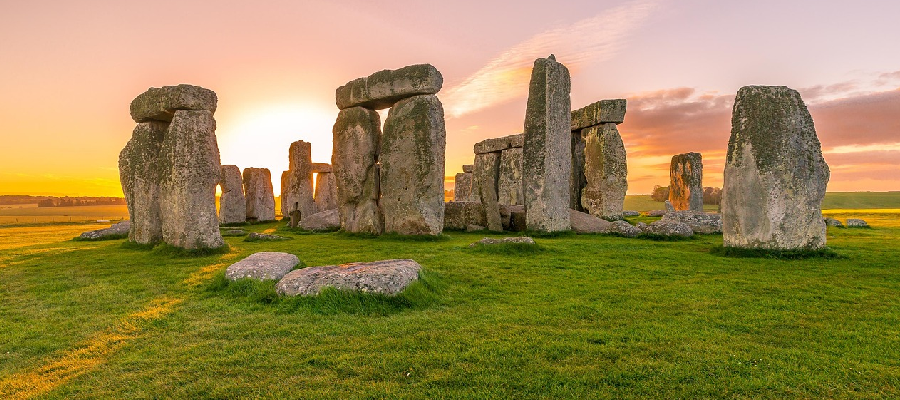
Avebury and Stonehenge (Inscribed 1986)
1 hour 40 minutes drive
Avebury and Stonehenge are two impressive neolithic sites dating back over 5,000 years. One of the most renowned sites in England, the standing stones of Stonehenge are a mystery that perplexes experts. What do you think their original purpose was? Whether a religious site, time-keeping tool, or alien landing pad, you be the judge.
Bath City & Spa Town (Inscribed 1987 & 2021)
2 hours 15 minutes drive
Bath is remarkable in that the entire city received UNESCO status in 1987 and yet again in 2021 for its lengthy history as a spa town. Explore Bath’s many lives through Roman occupation by visiting the Roman Baths to a Georgian health hub by visiting the Pump Room. Bath is yet another UK UNESCO world heritage site that we’ve covered in a previous post about film locations you can visit in the UK and learn about its role in Bridgerton.
Canterbury Cathedral, St. Augustine’s Abbey, and St. Martin’s Church (Inscribed 1988)
2 hours 30 minutes drive
Home to the Archbishop of Canterbury, the Canterbury Cathedral is not only one of Europe’s most beautiful cathedrals, but it’s also England’s oldest one. It also has some of the oldest mediaeval stained glass windows in the United Kingdom. The three religious buildings of the Cathedral, St. Augustine’s Abbey, and St. Martin’s Church were direct results of St. Augustine’s missionary endeavours in the Kingdom of Kent from 597 AD.
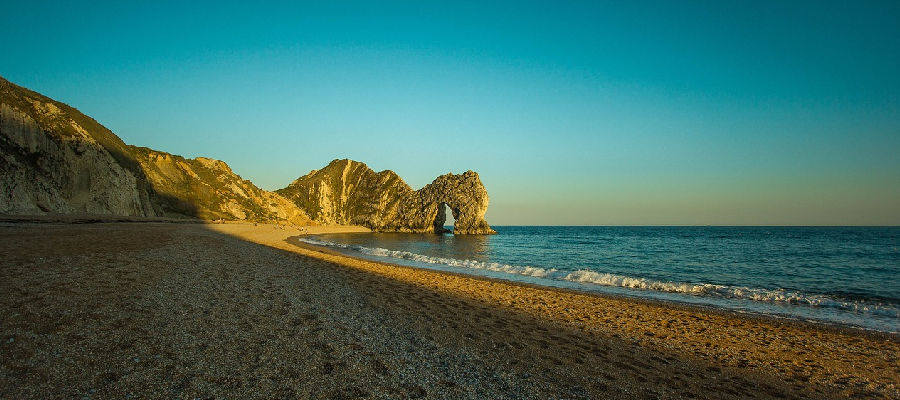
Jurassic Coast (Inscribed 2001)
2 hours 55 minutes drive
Spanning the Dorset and East Devon coast, the Jurassic Coast’s 100 miles of coastline offer breathtaking views and important fossil sites. It is England’s only natural UNESCO site, inscribed in 2001 for the rocks, fossils and landforms (such as the Durdle Door).
Ironbridge Gorge (Inscribed 1986)
3 hours drive
Known as the “cradle of the industrial revolution,” Ironbridge Gorge was responsible for much of the country’s coal, clay, iron and limestone deposits. Visitors can dive deeper into the lasting impact of the industrial revolution on the landscape, scientific discoveries and mining communities. Explore local museums, Victorian towns, gorge tunnels, and more.
Derwent Valley Mills (Inscribed 2001)
3 hours 5 minutes drive
The Derwent Valley Mills were another UNESCO inscribed industrial revolution hub. These mills harnessed water power to produce textiles, such as silk and cotton. Discover some of the world’s first factories like Richard Arkwright’s cotton mill. Learn about the development of mill communities in the Victorian towns of Cromford, Belper, Milford and Darley Abbey.
Blaenavon Industrial Landscape (Inscribed 2000)
3 hours 15 minutes drive
The Blaenavon Industrial Landscape in southern Wales accounted for a large quantity of the world’s iron and coal production of the Victorian era. Explore the impact industrialisation has had upon life at the various attractions of Blaenavon, such as the community heritage museum, the big pit national coal museum, the heritage railway, workmen’s hall and more.
Jodrell Bank Observatory (Inscribed 2019)
3 hours 20 minutes drive
The Jodrell Bank Observatory continues to contribute to astronomical research and study. Home to the oldest radio astronomy observatory still in existence, visit the Lovell Telescope. Originally built by Sir Bernard Lovell in 1957, this incredibly powerful telescope remains in use over 50 years later. It continues to enhance our understanding of the universe and contribute to the development of scientific theories. Under the care of the University of Manchester, this site continues to educate enthusiasts and astrophysicists alike.

Pontcysyllte Aqueduct and Canal (Inscribed 2009)
3 hours 40 minutes drive
Did you know that before the industrial revolution harnessed the power of locomotive railways, canals were the preferred mode of transportation? The Pontcysyllte Aqueduct, bridging England and Wales, spans 11 miles, making it Britain’s largest aqueduct. The canal was used for the quick transportation of iron and other heavy cargo during the industrial revolution. The “genius” design and stunning backdrop of the river Dee valley make it a must-visit UK UNESCO world heritage site.
Saltaire (Inscribed 2001)
4 hours 30 minutes drive
Saltaire, the West Yorkshire industrial village developed by Sir Titus Salt, aimed to create a utopian society. This was accomplished through funding community spaces, gardens, schools, hospitals, sports leagues and leisure centres for the employees. The textile mill itself has been transformed into unique independent shops while still maintaining the original features of the building. It also houses a David Hockney gallery!
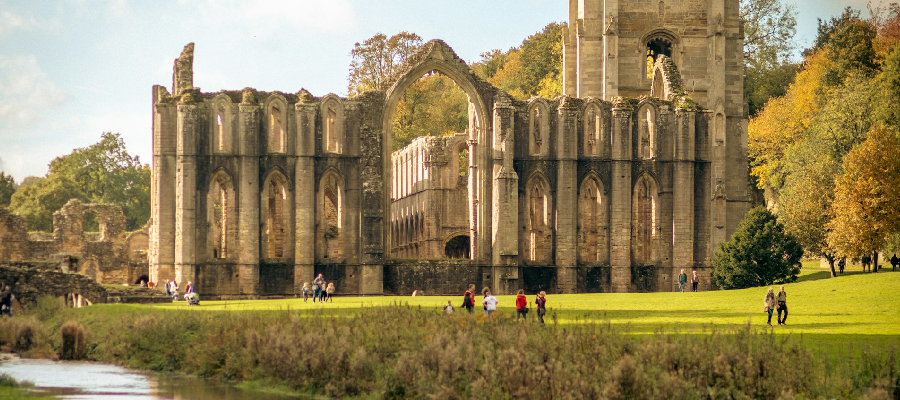
Studley Royal Park and Fountains Abbey (Inscribed 1986)
4 hours 35 minutes drive
The Studley Royal Park and Fountains Abbey UNESCO site is a living timeline of the landscape. The Abbey was founded in 1132 by Benedictine monks looking to escape the hustle and bustle of York. In 1604, Sir Stephen Proctor purchased the land and repurposed some of the abbey stones to build the Fountain’s Hall in the Jacobean style. In the 18th century, John Aislabie cultivated what remains the country’s most beautiful water park.
The Lake District (Inscribed 2017)
4 hours 45 minutes drive
The Lake District is a region of impressive natural beauty, historically significant farming communities, and a notable artistic and literary legacy. An Ice Age glacier carved out the landscape into its current state of craggy mountain tops, valleys and glistening lake fronts. Learn more about why the Lake District is a must-see location in the 5 best national parks in the UK blog post.
Cornwall and West Devon Mines (Inscribed 2006)
4 hours 55 minutes drive
The Cornwall and West Devon regions are known in part for their stunning landscapes and copper mining heritage. Though the copper and tin mining trades may have died out, their lasting impacts of romantic engine houses, mines, towns, villages, ports and harbours remain. Be sure to check out the St Agnes mineworker smallholding, Liskeard & Caradon Railway, and Botallack Mine.
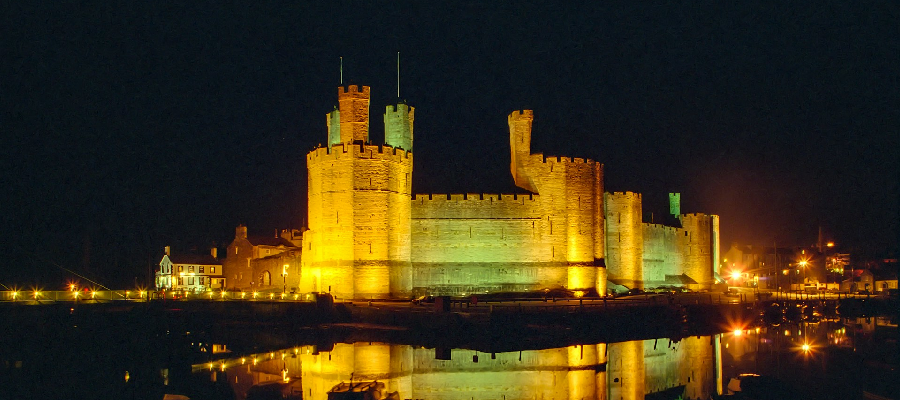
Castles and Town Walls of King Edward I in Gwynedd (Inscribed 1986)
5 hours drive
This Welsh UNESCO world heritage site is a result of skirmishes between the English and Welsh kingdoms. King Edward I fortified the region from 1283 to 1330 with four castles, each worth visiting for their unique histories and architectural designs. Beaumaris Castle, an ambitious project, was the last to be built and was left unfinished due to a lack of funds. Visitors can walk the restored Castell Conwy battlements and enjoy the Welsh mediaeval royal apartments. Castell Caernarfon took much of its architectural inspiration and imagery from the Roman empire with views of the River Seiont. Finally, guests enter Castell Harlech on the modern “floating” footbridge. All four of these battlements provide stunning coastal views of Wales.
The Slate Landscape (Inscribed 2021)
5 hours 5 minutes drive
Wales was prolific during the industrial revolution for its production of slate, so much so that one third of slate roofs in the world were sourced from the Slate Landscape! Explore quarries and mines, museums, worker settlements, estates and more.
Durham Castle and Cathedral (Inscribed 1986)
5 hours 10 minutes drive
The Durham castle surrounding the Durham Cathedral protects this site of religious importance, once home to the prince-bishops. Built between the 11th and 12th centuries, this cathedral on the hill is the final resting place of Saint Cuthbert and Saint Bede. It is one of England’s most outstanding examples of Norman religious architecture.
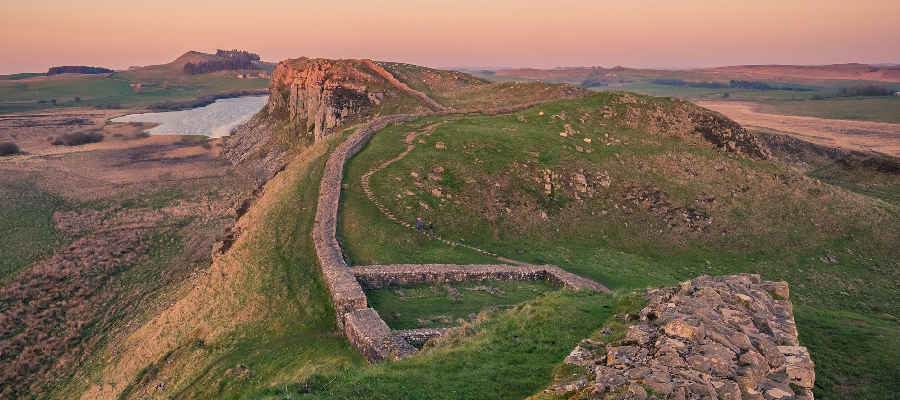
Hadrian’s Wall (Inscribed 1987)
5 hours 45 minutes drive
Hadrian’s Wall, one of the UK’s most well known historic sites, was built in the 2nd century by Emperor Hadrian. This Roman fortification in occupied Britain kept the empire safe from northern invaders.
The UK’s UNESCO World Heritage Sites are Just a Car Ride Away
Explore these outstanding UK sites inscribed to the UNESCO world heritage sites database for an unforgettable day out! Whether you want a quick trip or a road trip further away, get there with one of our reliable rental cars or vans.
View our hire vehicles
Send us photos of your UNESCO world heritage site visit on X (Twitter), Facebook or Instagram.